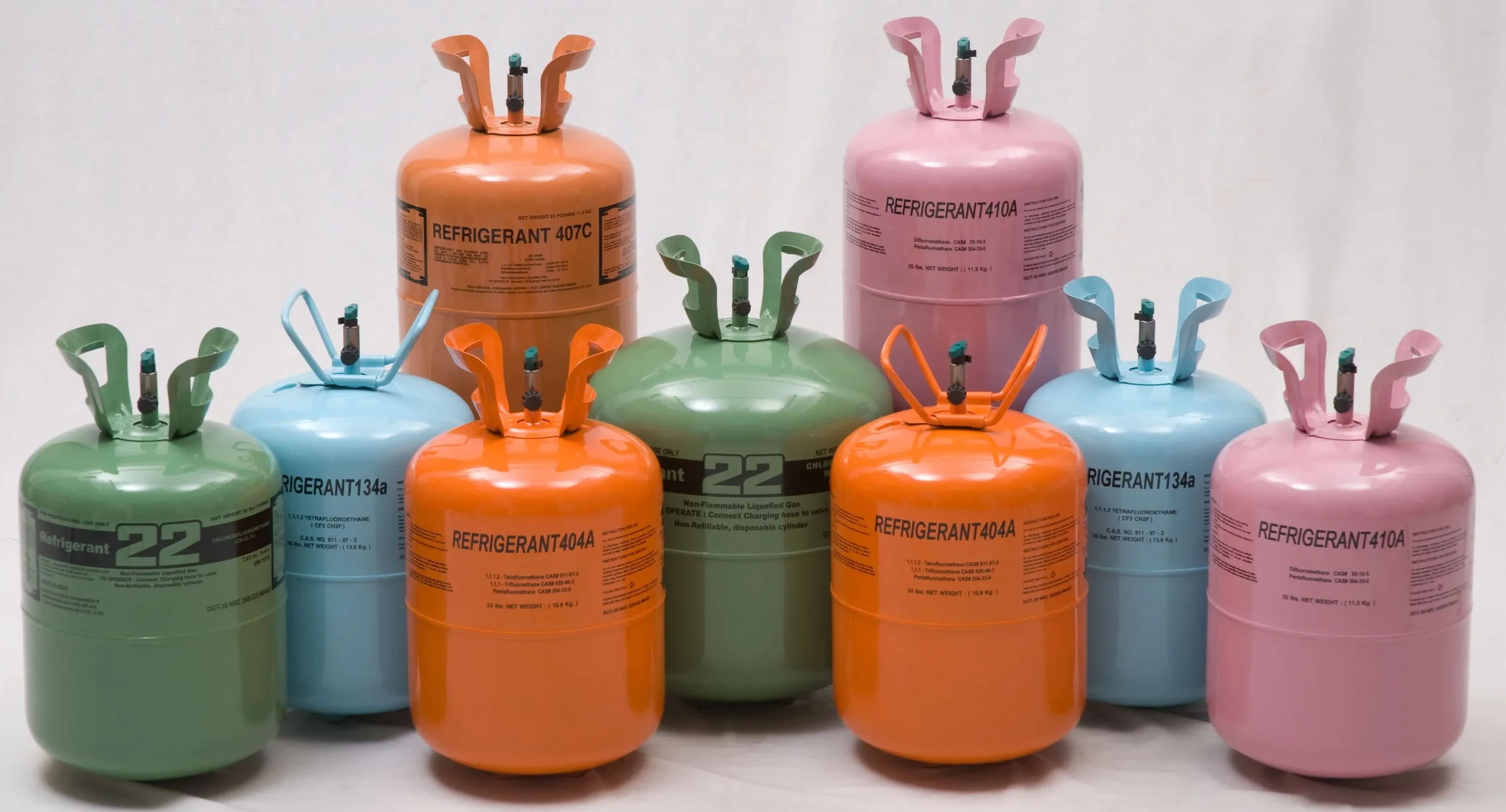
Federal rules under the American Innovation and Manufacturing Act, commonly called the AIM Act, are changing how certain hydrofluorocarbon refrigerants are managed, how leaks from some existing systems must be addressed, and which refrigerants can be used in new equipment.
For commercial property owners, the takeaway is not that every existing HVAC system suddenly needs to be replaced. It is that refrigerant type should now be part of the conversation when evaluating maintenance, repairs, equipment replacement, and long-term capital plans.
Why Are Commercial HVAC Refrigerants Changing?
Hydrofluorocarbons, or HFCs, became widely used as replacements for older ozone-depleting refrigerants. The problem is that many HFCs have relatively high global warming potentials.
The AIM Act gives the U.S. Environmental Protection Agency authority to address HFCs in three primary ways: reducing their production and consumption, minimizing releases and increasing reclamation, and transitioning certain industries and equipment toward alternative technologies. US EPA
For building owners, this affects everything from air-conditioning systems and heat pumps to chillers and commercial refrigeration.
The exact requirements depend heavily on the equipment.
A rooftop unit serving a small commercial space may fall under a different EPA category than a large central chiller, VRF system, or supermarket refrigeration system.
So there is no single rule that applies identically to every piece of HVAC equipment in a commercial building.
Do Older HVAC Systems Have to Be Replaced?
Not necessarily.
EPA's Technology Transitions rules are largely focused on the use of higher-GWP HFCs in new products and systems, rather than forcing owners to immediately remove functioning existing equipment.
EPA specifically states that owners can continue operating and repairing legacy refrigeration, air-conditioning, and heat-pump systems throughout their useful lives. Major components such as compressors and condensing units may also be replaced in many circumstances as repairs to an existing system.
That distinction is important.
A building with existing equipment using a higher-GWP refrigerant does not automatically need to replace the system simply because refrigerant regulations have changed.
But the economics of keeping that equipment may change over time.
An aging unit with recurring leaks, expensive repairs, declining efficiency, and limited remaining service life presents a very different decision than a well-maintained system that may operate reliably for several more years.
Building owners should therefore think beyond the question:
"Are we legally required to replace this?"
A better question may be:
"Does continuing to repair this equipment still make financial and operational sense?"
Why Refrigerant Type Belongs in Capital Planning
Consider two buildings with HVAC equipment of roughly the same age.
Building A has equipment with a strong maintenance history, few refrigerant issues, readily available parts, and several years of expected life remaining.
Building B has repeated refrigerant leaks, deteriorating components, rising maintenance costs, and a major replacement already expected within the next few years.
Technically, both systems may still be repairable.
Strategically, they may require very different plans.
For Building B, continuing to make significant repairs could mean spending money on equipment that is approaching replacement anyway.
That is where refrigerant management becomes a capital-planning issue.
Owners may want to evaluate:
Equipment age
Refrigerant type
Refrigerant charge size
Historical leaks
Repair frequency
Replacement-part availability
Energy performance
Remaining useful life
Replacement cost
Electrical requirements of replacement equipment
New-system refrigerant requirements also vary by equipment category and have continued to evolve. EPA finalized additional revisions to certain Technology Transitions requirements in May 2026, including changes affecting residential and light-commercial HVAC and several refrigeration subsectors. Owners planning replacements should therefore verify the current requirements that apply to the specific equipment rather than relying on a general refrigerant phaseout date.
Six Questions to Ask Your HVAC Contractor
Building owners do not need to become refrigerant experts.
They should, however, know enough to ask the right questions.
For every major HVAC or refrigeration system, consider asking:
1. What refrigerant does this equipment use?
Start with the basics. Do not wait until a major repair to find out.
2. What is the system's full refrigerant charge?
Charge size can help determine whether certain regulatory requirements apply.
3. Do the 2026 leak-repair requirements apply to this equipment?
Equipment classification matters, especially when distinguishing between light-commercial air conditioning, chillers, VRF, and refrigeration systems.
4. Has the system experienced recurring refrigerant leaks?
Repeated leaks may indicate a larger mechanical problem and can materially affect the repair-versus-replace decision.
5. How difficult or expensive will this equipment be to maintain over the next five years?
Consider refrigerant, parts, labor, efficiency, and system condition together.
6. If this system failed tomorrow, what would we replace it with?
This may be the most important question of all.
The middle of a heat wave is not the ideal time to develop a long-term HVAC strategy.
Create a Refrigerant Inventory
A simple refrigerant inventory can give owners and facility teams a clearer picture of future risk.
For each major system, record:
Equipment type
Manufacturer and model
Installation year
Refrigerant type
Refrigerant charge
Service history
Known refrigerant leaks
Current condition
Expected remaining useful life
Anticipated replacement year
Large properties may have dozens of pieces of equipment using different refrigerants.
A hotel might have split systems, rooftop equipment, kitchen refrigeration, walk-in coolers, and other refrigerant-containing equipment.
An office building might have central chillers, VRF systems, rooftop units, or dedicated cooling equipment.
Not all of those systems will be subject to the same requirements.
An inventory gives ownership a place to start.
Don't Separate Refrigerant Planning From Energy Planning
Replacing HVAC equipment is rarely just a refrigerant decision.
A new system can change a building's:
Energy consumption
Peak electrical demand
Heating and cooling efficiency
Control sequences
Ventilation strategy
Electrical capacity requirements
Maintenance needs
Utility costs
For example, replacing an aging chiller could present an opportunity to evaluate controls, pumping, cooling-tower operation, equipment sizing, and building loads at the same time.
Likewise, an owner considering electrification should evaluate whether future HVAC replacements will require additional electrical infrastructure.
Looking at refrigerants, energy performance, controls, and capital planning together can lead to better decisions than treating each issue separately.
The Bottom Line
The 2026 refrigerant rules do not mean commercial building owners need to replace functioning HVAC equipment overnight.
But they do mean refrigerants deserve more attention than they may have received in the past.
Know what equipment your building has.
Know what refrigerant it uses.
Understand which requirements apply.
Track recurring leaks and repair costs.
And have a replacement strategy before you urgently need one.
Because the worst time to decide what comes after your existing HVAC system is after it has already failed.